

SUBSCRIBE
RATE
COMMENT
SUBSCRIBE RATE COMMENT
follow on spotify, apple YOUTUBE or AMAZON PODCASTS for auto updates
Podcast Portugal is available to subscibe on Spotify, YouTube, Amazon and Apple Podcasts.
Please Subscribe on your favourite provider so we can keep bringing you interesting guests and topics.
You can also listen or download each episode below.
guest line up.
Meet the voices behind the stories — every Friday, we release a new episode featuring inspiring guests from across Portugal and beyond, including artists, chefs, winemakers, musicians, historians, entrepreneurs, locals and expats.
Explore our diverse guest line-up and discover the people shaping Portuguese culture, food, travel, and daily life.
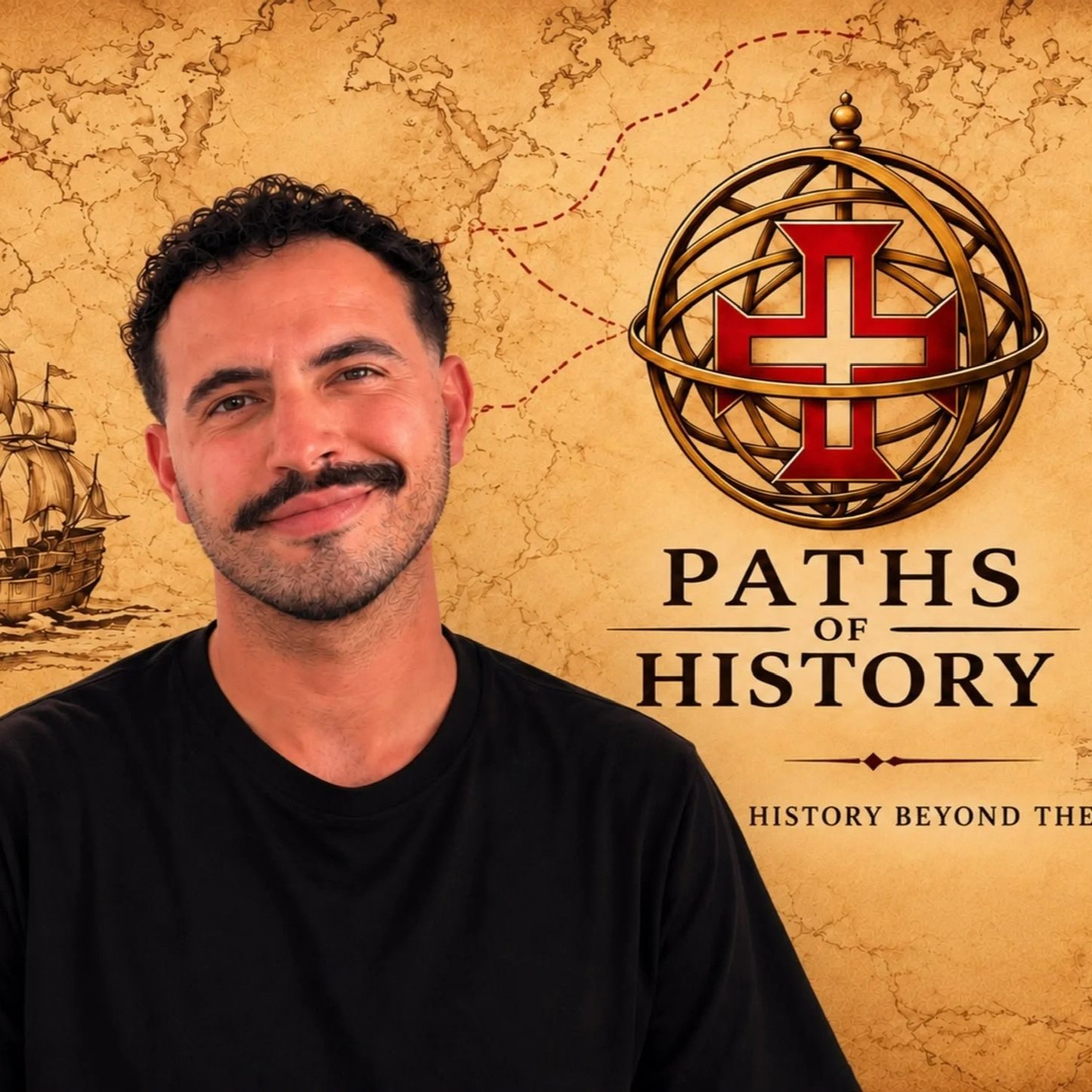
James Bond, Spies and the Battle of Aljubarrota: Portuguese History with Tomás Pedrosa of Paths of History.
James Bond, Spies and the Battle of Aljubarrota: Portuguese History with Tomás Pedrosa of Paths of History.
How Estoril inspired 007, why Portugal's alliance with England is the world's oldest, and why history is really about storytelling.
Tomás Pedrosa of Paths of History explores Portuguese history, from WWII spies in Estoril and the James Bond story to the Battle of Aljubarrota.
Portuguese history is far more connected to the wider world than most people realise, and few people tell that story with as much enthusiasm as Tomás Pedrosa. A licensed tour guide of nine years, working across Leiria, Sintra, Lisbon and central Portugal, Tomás is the founder of Paths of History, and in this episode he explains how a schoolboy who disliked history became one of its most passionate storytellers.
Tomás and Justin begin with the idea that history is, at heart, storytelling rather than a list of dates and facts. They discuss why so much of what we know comes to us indirectly through archives and secondary sources, and why the way history is taught, including the gaps around the royalist and dictatorial periods in Portuguese schools, shapes what people understand about their own country.
From there the conversation turns to identity. Drawing on DNA evidence and his own ancestry results, Tomás describes Portugal as a genuine melting pot, shaped by centuries of migration, conquest and trade, and by explorers who carried Portuguese influence around the globe. He argues that sharing this history helps counter nationalism and the "us versus them" mindset, and helps us avoid repeating the mistakes of the past.
The centrepiece of the episode is the extraordinary story of Portugal in the Second World War. As a neutral country leaning towards the Allies, Portugal became a haven for exiled royals, diplomats and spies, with Estoril and Cascais at the heart of the intrigue. Tomás recounts the tale of Dusko Popov, the real-life double agent who operated in Estoril and inspired Ian Fleming to create James Bond, and points out where Bond's screen adventures were filmed in Portugal. He also explains Portugal's delicate diplomacy, including the decision to allow British and American bases in the Azores in 1943.
That balancing act rested on the Anglo-Portuguese Alliance, formalised in the treaties of 1373 and 1386 and recognised as the oldest military alliance in the world. Tomás also shares some lighter examples of the connection, such as Queen Catarina introducing tea drinking to England.
Finally, the pair go back to the moment that made Portugal an independent nation. When King Ferdinand died without a male heir in 1383, Portugal faced annexation by Castile. At the Battle of Aljubarrota in 1385, around 6,000 Portuguese and English troops defeated a far larger Castilian and French army of some 33,000, through superior tactics and knowledge of the terrain. The victory brought the Avis dynasty to the throne, led to the marriage of João I and Philippa of Lancaster, and produced the "illustrious generation" that included Henry the Navigator, setting the stage for the Age of Discovery.
Whether you are a history lover, a curious visitor or a new resident wanting to understand your adopted home, this is a lively and accessible conversation about the stories that made Portugal.
Follow Paths of History on Instagram for more stories and tours: https://www.instagram.com/pathsofhistory/
How Estoril inspired 007, why Portugal's alliance with England is the world's oldest, and why history is really about storytelling.
Tomás Pedrosa of Paths of History explores Portuguese history, from WWII spies in Estoril and the James Bond story to the Battle of Aljubarrota.
Portuguese history is far more connected to the wider world than most people realise, and few people tell that story with as much enthusiasm as Tomás Pedrosa. A licensed tour guide of nine years, working across Leiria, Sintra, Lisbon and central Portugal, Tomás is the founder of Paths of History, and in this episode he explains how a schoolboy who disliked history became one of its most passionate storytellers.
Tomás and Justin begin with the idea that history is, at heart, storytelling rather than a list of dates and facts. They discuss why so much of what we know comes to us indirectly through archives and secondary sources, and why the way history is taught, including the gaps around the royalist and dictatorial periods in Portuguese schools, shapes what people understand about their own country.
From there the conversation turns to identity. Drawing on DNA evidence and his own ancestry results, Tomás describes Portugal as a genuine melting pot, shaped by centuries of migration, conquest and trade, and by explorers who carried Portuguese influence around the globe. He argues that sharing this history helps counter nationalism and the "us versus them" mindset, and helps us avoid repeating the mistakes of the past.
The centrepiece of the episode is the extraordinary story of Portugal in the Second World War. As a neutral country leaning towards the Allies, Portugal became a haven for exiled royals, diplomats and spies, with Estoril and Cascais at the heart of the intrigue. Tomás recounts the tale of Dusko Popov, the real-life double agent who operated in Estoril and inspired Ian Fleming to create James Bond, and points out where Bond's screen adventures were filmed in Portugal. He also explains Portugal's delicate diplomacy, including the decision to allow British and American bases in the Azores in 1943.
That balancing act rested on the Anglo-Portuguese Alliance, formalised in the treaties of 1373 and 1386 and recognised as the oldest military alliance in the world. Tomás also shares some lighter examples of the connection, such as Queen Catarina introducing tea drinking to England.
Finally, the pair go back to the moment that made Portugal an independent nation. When King Ferdinand died without a male heir in 1383, Portugal faced annexation by Castile. At the Battle of Aljubarrota in 1385, around 6,000 Portuguese and English troops defeated a far larger Castilian and French army of some 33,000, through superior tactics and knowledge of the terrain. The victory brought the Avis dynasty to the throne, led to the marriage of João I and Philippa of Lancaster, and produced the "illustrious generation" that included Henry the Navigator, setting the stage for the Age of Discovery.
Whether you are a history lover, a curious visitor or a new resident wanting to understand your adopted home, this is a lively and accessible conversation about the stories that made Portugal.
Follow Paths of History on Instagram for more stories and tours:
https://www.instagram.com/pathsofhistory/
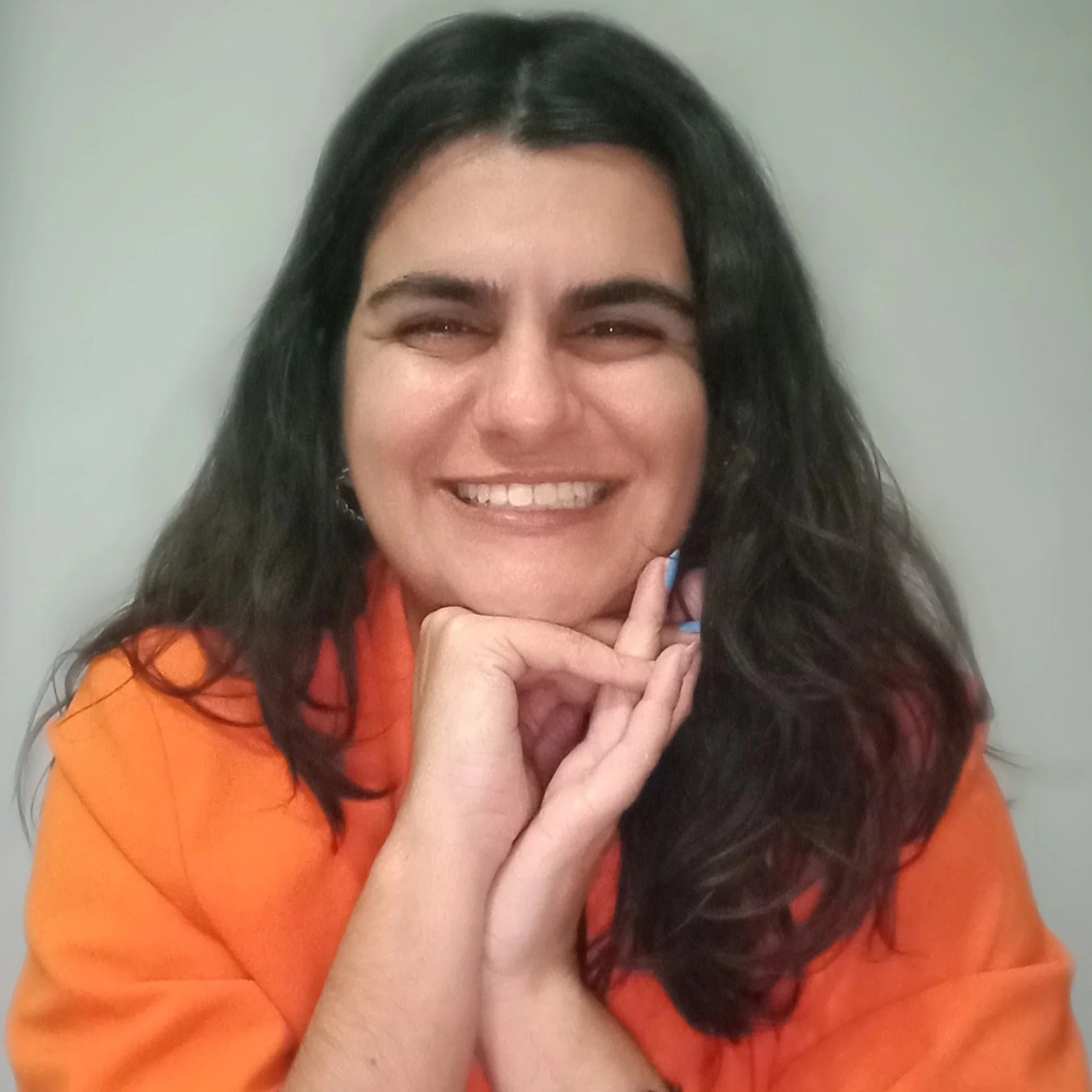
Bruna Ramalho Galamba — AI, Archaeology & Communicating Portugal’s Past in the Digital Age.
Bruna Ramalho Galamba — AI, Archaeology & Communicating Portugal’s Past in the Digital Age.
Exploring artificial intelligence, digital heritage, historical data, and how archaeology can reach wider modern audiences.
In this episode of Podcast Portugal, Justin West speaks with Bruna Ramalho Galamba about artificial intelligence in archaeology, digital heritage preservation, science communication, and how Portugal’s past can be shared with wider modern audiences through technology, storytelling, and online media. The conversation explores how AI, photogrammetry, 3D modelling, and digital archaeology are transforming the way researchers analyse, preserve, and communicate archaeological data, while also examining the dangers of AI misinterpreting historical evidence when trained on incomplete or poor-quality information. Bruna explains why much of the world’s most valuable archaeological knowledge still exists in books, archives, and unpublished research that remains inaccessible to AI systems, highlighting the growing importance of building reliable national databases and trusted digital resources for archaeology and cultural heritage.
Throughout the episode, Justin and Bruna discuss the challenge of communicating archaeology beyond academic circles and why public engagement has become essential for the future of heritage preservation. They explore who controls archaeological data, how digital platforms influence historical narratives, and why accessible, high-quality information is critical in an age increasingly shaped by artificial intelligence. The conversation also looks at how YouTube history channels, visual storytelling, and online educational content are inspiring younger audiences to engage with archaeology in ways traditional academic institutions often struggle to achieve.
Bruna also reflects on her work connected to the Fortaleza de Santa Catarina de Ribamar, discussing how digital documentation tools such as photogrammetry and 3D reconstruction can preserve important historical sites while making Portuguese maritime and coastal history more engaging and accessible to the public.
Links to Bruna Ramalho Galamba
NOVA University Research Profile
Research Presentation — Fortaleza de Santa Catarina de Ribamar
https://linktr.ee/brunargalamba
Bruna Ramalho Galamba is a Portuguese archaeologist and science communicator whose work focuses on digital heritage, public engagement, and the use of emerging technologies in archaeology. Educated at the NOVA School of Social Sciences and Humanities, where she completed both her undergraduate and master’s degrees in archaeology between 2016 and 2021, Bruna represents a new generation of researchers working to make archaeology more accessible, collaborative, and relevant in the digital age.
Her academic research has centred on the archaeology of architecture and the study of Modern Age military structures, combining traditional archaeological methods with technologies such as photogrammetry and 3D modelling. Through excavation campaigns, laboratory work, and experience within Portugal’s cultural heritage sector, including an internship with the Portuguese Ministry of Culture, Bruna has developed a multidisciplinary approach that bridges field archaeology, conservation, and digital reconstruction.
A strong advocate for inclusive and digitally accessible archaeology, Bruna has contributed to discussions surrounding the future of cultural heritage documentation and communication in Portugal. Her work highlights how digital tools can democratise access to archaeological knowledge, helping museums, researchers, and educational institutions share historical information with wider audiences beyond academia.
Alongside her academic work, Bruna is also active in science communication and public outreach, regularly discussing archaeology, heritage policy, and the challenges facing early-career researchers in Portugal. Through professional platforms and digital media, she promotes greater visibility for archaeology while encouraging more accessible conversations around cultural preservation, historical interpretation, and the role technology — including artificial intelligence — may play in shaping the future of heritage research and communication.
Revolut Personal click this link
Revolut Business referral link
Use the code NEWTOAIRALO15 to receive 15% discount on eSIMs smarter, stay connected — download Airalo SIM cards before your next adventure.
To book flexible dates surf coaching sessions, to find out about immersive surf training camps, online video analysis program and special JWC rates for using SurfREC, head to justinwestcoaching.com
Exploring artificial intelligence, digital heritage, historical data, and how archaeology can reach wider modern audiences.
In this episode of Podcast Portugal, Justin West speaks with Bruna Ramalho Galamba about artificial intelligence in archaeology, digital heritage preservation, science communication, and how Portugal’s past can be shared with wider modern audiences through technology, storytelling, and online media. The conversation explores how AI, photogrammetry, 3D modelling, and digital archaeology are transforming the way researchers analyse, preserve, and communicate archaeological data, while also examining the dangers of AI misinterpreting historical evidence when trained on incomplete or poor-quality information. Bruna explains why much of the world’s most valuable archaeological knowledge still exists in books, archives, and unpublished research that remains inaccessible to AI systems, highlighting the growing importance of building reliable national databases and trusted digital resources for archaeology and cultural heritage.
Throughout the episode, Justin and Bruna discuss the challenge of communicating archaeology beyond academic circles and why public engagement has become essential for the future of heritage preservation. They explore who controls archaeological data, how digital platforms influence historical narratives, and why accessible, high-quality information is critical in an age increasingly shaped by artificial intelligence. The conversation also looks at how YouTube history channels, visual storytelling, and online educational content are inspiring younger audiences to engage with archaeology in ways traditional academic institutions often struggle to achieve.
Bruna also reflects on her work connected to the Fortaleza de Santa Catarina de Ribamar, discussing how digital documentation tools such as photogrammetry and 3D reconstruction can preserve important historical sites while making Portuguese maritime and coastal history more engaging and accessible to the public.
Links to Bruna Ramalho Galamba
NOVA University Research Profile
Research Presentation — Fortaleza de Santa Catarina de Ribamar
https://linktr.ee/brunargalamba
Bruna Ramalho Galamba is a Portuguese archaeologist and science communicator whose work focuses on digital heritage, public engagement, and the use of emerging technologies in archaeology. Educated at the NOVA School of Social Sciences and Humanities, where she completed both her undergraduate and master’s degrees in archaeology between 2016 and 2021, Bruna represents a new generation of researchers working to make archaeology more accessible, collaborative, and relevant in the digital age.
Her academic research has centred on the archaeology of architecture and the study of Modern Age military structures, combining traditional archaeological methods with technologies such as photogrammetry and 3D modelling. Through excavation campaigns, laboratory work, and experience within Portugal’s cultural heritage sector, including an internship with the Portuguese Ministry of Culture, Bruna has developed a multidisciplinary approach that bridges field archaeology, conservation, and digital reconstruction
A strong advocate for inclusive and digitally accessible archaeology, Bruna has contributed to discussions surrounding the future of cultural heritage documentation and communication in Portugal. Her work highlights how digital tools can democratise access to archaeological knowledge, helping museums, researchers, and educational institutions share historical information with wider audiences beyond academia.
Alongside her academic work, Bruna is also active in science communication and public outreach, regularly discussing archaeology, heritage policy, and the challenges facing early-career researchers in Portugal. Through professional platforms and digital media, she promotes greater visibility for archaeology while encouraging more accessible conversations around cultural preservation, historical interpretation, and the role technology — including artificial intelligence — may play in shaping the future of heritage research and communication.
Revolut Personal click this link
Revolut Business referral link
Use the code NEWTOAIRALO15 to receive 15% discount on eSIMs smarter, stay connected — download Airalo SIM cards before your next adventure.
To book flexible dates surf coaching sessions, to find out about immersive surf training camps, online video analysis program and special JWC rates for using SurfREC, head to justinwestcoaching.com