

SUBSCRIBE
RATE
COMMENT
SUBSCRIBE RATE COMMENT
follow on spotify, apple YOUTUBE or AMAZON PODCASTS for auto updates
Podcast Portugal is available to subscibe on Spotify, YouTube, Amazon and Apple Podcasts.
Please Subscribe on your favourite provider so we can keep bringing you interesting guests and topics.
You can also listen or download each episode below.
guest line up.
Meet the voices behind the stories — every Friday, we release a new episode featuring inspiring guests from across Portugal and beyond, including artists, chefs, winemakers, musicians, historians, entrepreneurs, locals and expats.
Explore our diverse guest line-up and discover the people shaping Portuguese culture, food, travel, and daily life.
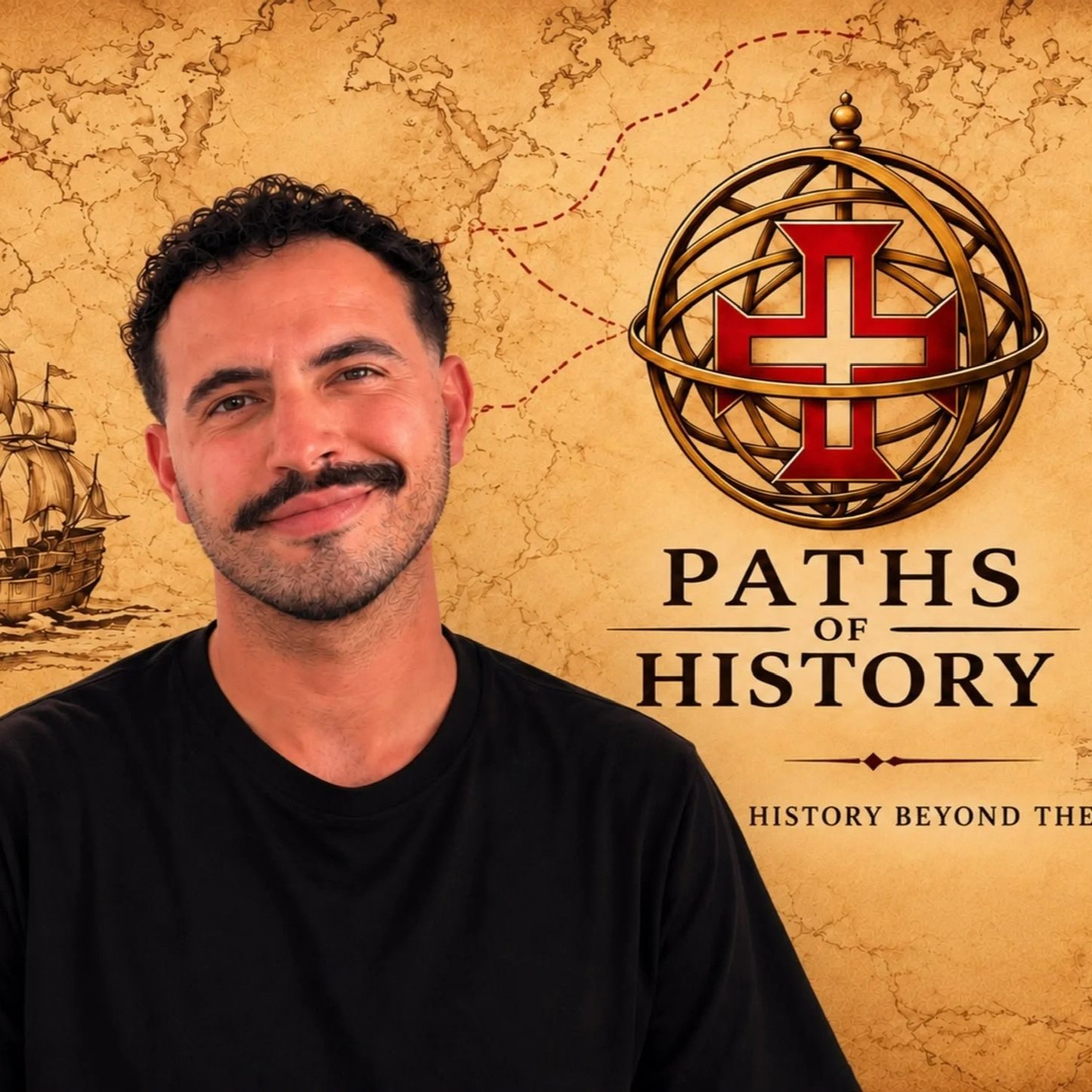
James Bond, Spies and the Battle of Aljubarrota: Portuguese History with Tomás Pedrosa of Paths of History.
James Bond, Spies and the Battle of Aljubarrota: Portuguese History with Tomás Pedrosa of Paths of History.
How Estoril inspired 007, why Portugal's alliance with England is the world's oldest, and why history is really about storytelling.
Tomás Pedrosa of Paths of History explores Portuguese history, from WWII spies in Estoril and the James Bond story to the Battle of Aljubarrota.
Portuguese history is far more connected to the wider world than most people realise, and few people tell that story with as much enthusiasm as Tomás Pedrosa. A licensed tour guide of nine years, working across Leiria, Sintra, Lisbon and central Portugal, Tomás is the founder of Paths of History, and in this episode he explains how a schoolboy who disliked history became one of its most passionate storytellers.
Tomás and Justin begin with the idea that history is, at heart, storytelling rather than a list of dates and facts. They discuss why so much of what we know comes to us indirectly through archives and secondary sources, and why the way history is taught, including the gaps around the royalist and dictatorial periods in Portuguese schools, shapes what people understand about their own country.
From there the conversation turns to identity. Drawing on DNA evidence and his own ancestry results, Tomás describes Portugal as a genuine melting pot, shaped by centuries of migration, conquest and trade, and by explorers who carried Portuguese influence around the globe. He argues that sharing this history helps counter nationalism and the "us versus them" mindset, and helps us avoid repeating the mistakes of the past.
The centrepiece of the episode is the extraordinary story of Portugal in the Second World War. As a neutral country leaning towards the Allies, Portugal became a haven for exiled royals, diplomats and spies, with Estoril and Cascais at the heart of the intrigue. Tomás recounts the tale of Dusko Popov, the real-life double agent who operated in Estoril and inspired Ian Fleming to create James Bond, and points out where Bond's screen adventures were filmed in Portugal. He also explains Portugal's delicate diplomacy, including the decision to allow British and American bases in the Azores in 1943.
That balancing act rested on the Anglo-Portuguese Alliance, formalised in the treaties of 1373 and 1386 and recognised as the oldest military alliance in the world. Tomás also shares some lighter examples of the connection, such as Queen Catarina introducing tea drinking to England.
Finally, the pair go back to the moment that made Portugal an independent nation. When King Ferdinand died without a male heir in 1383, Portugal faced annexation by Castile. At the Battle of Aljubarrota in 1385, around 6,000 Portuguese and English troops defeated a far larger Castilian and French army of some 33,000, through superior tactics and knowledge of the terrain. The victory brought the Avis dynasty to the throne, led to the marriage of João I and Philippa of Lancaster, and produced the "illustrious generation" that included Henry the Navigator, setting the stage for the Age of Discovery.
Whether you are a history lover, a curious visitor or a new resident wanting to understand your adopted home, this is a lively and accessible conversation about the stories that made Portugal.
Follow Paths of History on Instagram for more stories and tours: https://www.instagram.com/pathsofhistory/
How Estoril inspired 007, why Portugal's alliance with England is the world's oldest, and why history is really about storytelling.
Tomás Pedrosa of Paths of History explores Portuguese history, from WWII spies in Estoril and the James Bond story to the Battle of Aljubarrota.
Portuguese history is far more connected to the wider world than most people realise, and few people tell that story with as much enthusiasm as Tomás Pedrosa. A licensed tour guide of nine years, working across Leiria, Sintra, Lisbon and central Portugal, Tomás is the founder of Paths of History, and in this episode he explains how a schoolboy who disliked history became one of its most passionate storytellers.
Tomás and Justin begin with the idea that history is, at heart, storytelling rather than a list of dates and facts. They discuss why so much of what we know comes to us indirectly through archives and secondary sources, and why the way history is taught, including the gaps around the royalist and dictatorial periods in Portuguese schools, shapes what people understand about their own country.
From there the conversation turns to identity. Drawing on DNA evidence and his own ancestry results, Tomás describes Portugal as a genuine melting pot, shaped by centuries of migration, conquest and trade, and by explorers who carried Portuguese influence around the globe. He argues that sharing this history helps counter nationalism and the "us versus them" mindset, and helps us avoid repeating the mistakes of the past.
The centrepiece of the episode is the extraordinary story of Portugal in the Second World War. As a neutral country leaning towards the Allies, Portugal became a haven for exiled royals, diplomats and spies, with Estoril and Cascais at the heart of the intrigue. Tomás recounts the tale of Dusko Popov, the real-life double agent who operated in Estoril and inspired Ian Fleming to create James Bond, and points out where Bond's screen adventures were filmed in Portugal. He also explains Portugal's delicate diplomacy, including the decision to allow British and American bases in the Azores in 1943.
That balancing act rested on the Anglo-Portuguese Alliance, formalised in the treaties of 1373 and 1386 and recognised as the oldest military alliance in the world. Tomás also shares some lighter examples of the connection, such as Queen Catarina introducing tea drinking to England.
Finally, the pair go back to the moment that made Portugal an independent nation. When King Ferdinand died without a male heir in 1383, Portugal faced annexation by Castile. At the Battle of Aljubarrota in 1385, around 6,000 Portuguese and English troops defeated a far larger Castilian and French army of some 33,000, through superior tactics and knowledge of the terrain. The victory brought the Avis dynasty to the throne, led to the marriage of João I and Philippa of Lancaster, and produced the "illustrious generation" that included Henry the Navigator, setting the stage for the Age of Discovery.
Whether you are a history lover, a curious visitor or a new resident wanting to understand your adopted home, this is a lively and accessible conversation about the stories that made Portugal.
Follow Paths of History on Instagram for more stories and tours:
https://www.instagram.com/pathsofhistory/
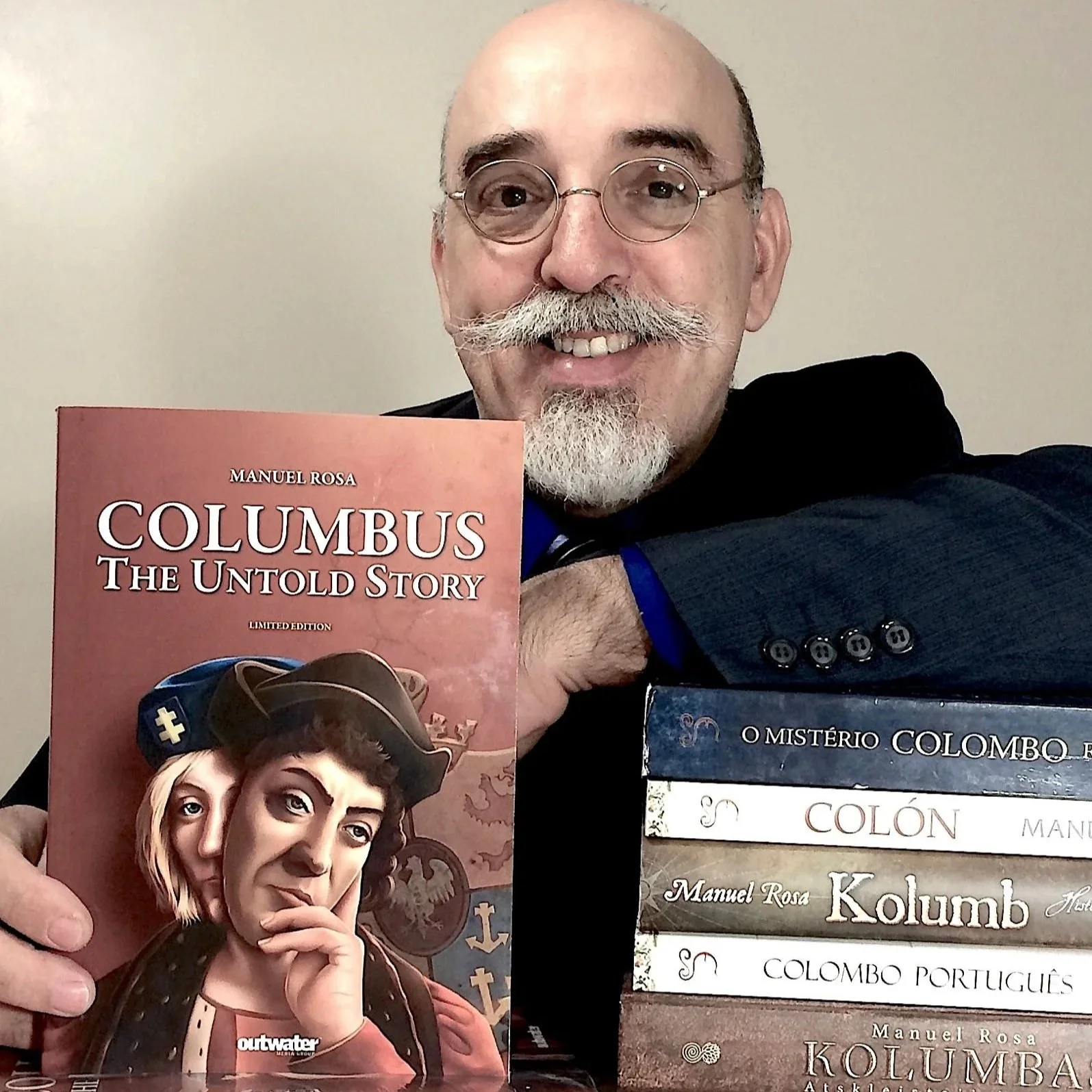
Colón, Not Columbus: Dr. Manuel Rosa on the 500-Year Identity Mystery Behind the Man Who “Discovered” America.
Colón, Not Columbus: Dr. Manuel Rosa on the 500-Year Identity Mystery Behind the Man Who “Discovered” America.
A printing error, a noble Portuguese marriage and decades of suppressed evidence: historian Manuel Rosa makes the case that Christopher Columbus was never who we were told he was.
Portuguese-American historian Dr. Manuel Rosa has spent thirty-five years challenging the accepted story of Christopher Columbus, and in this episode of Podcast Portugal he explains why the man history remembers as an Italian weaver was, in his view, never Italian at all. Rosa traces the confusion to a fifteenth-century printing error in Rome that sent non-Spanish historians searching for a “Colombo” in Italy, while Spain had always known the navigator by a different name entirely: Colón.
Central to Rosa’s research is the marriage of Colón to Filipa Moniz, a high-ranking Portuguese noblewoman and Commendadora of the Order of Santiago, whose family sat at the heart of the royal court. Rosa argues that such a union would have been unthinkable for a peasant or a foreign weaver, and that the marriage alone points to a man of noble standing whose true background had to be concealed rather than celebrated.
That concealment, Rosa contends, was deliberate and shared between the Portuguese and Spanish courts. His research points towards Colón being the son of a Polish king who vanished after the Battle of Varna in 1444, his real identity hidden behind a chosen name meaning “member of Christ.” It is a claim that has drawn fierce resistance from mainstream historians, many of whom, Rosa says, have dismissed his work without engaging with the documentary evidence behind it.
The conversation also explores the role of DNA testing in the search for the truth, from the 2003 tests on remains in Seville to a fresh round of studies in 2024 that ruled out the Italian, Portuguese royal and Jewish Catalan theories alike — without yet confirming any alternative. For Rosa, each negative result narrows the field further, and he explains why he believes the real answer has been hiding in plain sight for over five centuries.
To find all Dr Rosa´s books and follow his studies you can connect through the links below:
A printing error, a noble Portuguese marriage and decades of suppressed evidence: historian Manuel Rosa makes the case that Christopher Columbus was never who we were told he was.
Portuguese-American historian Dr. Manuel Rosa has spent thirty-five years challenging the accepted story of Christopher Columbus, and in this episode of Podcast Portugal he explains why the man history remembers as an Italian weaver was, in his view, never Italian at all. Rosa traces the confusion to a fifteenth-century printing error in Rome that sent non-Spanish historians searching for a “Colombo” in Italy, while Spain had always known the navigator by a different name entirely: Colón.
Central to Rosa’s research is the marriage of Colón to Filipa Moniz, a high-ranking Portuguese noblewoman and Commendadora of the Order of Santiago, whose family sat at the heart of the royal court. Rosa argues that such a union would have been unthinkable for a peasant or a foreign weaver, and that the marriage alone points to a man of noble standing whose true background had to be concealed rather than celebrated.
That concealment, Rosa contends, was deliberate and shared between the Portuguese and Spanish courts. His research points towards Colón being the son of a Polish king who vanished after the Battle of Varna in 1444, his real identity hidden behind a chosen name meaning “member of Christ.” It is a claim that has drawn fierce resistance from mainstream historians, many of whom, Rosa says, have dismissed his work without engaging with the documentary evidence behind it.
The conversation also explores the role of DNA testing in the search for the truth, from the 2003 tests on remains in Seville to a fresh round of studies in 2024 that ruled out the Italian, Portuguese royal and Jewish Catalan theories alike — without yet confirming any alternative. For Rosa, each negative result narrows the field further, and he explains why he believes the real answer has been hiding in plain sight for over five centuries.
To find all Dr Rosa´s books and follow his studies you can connect through the links below: